

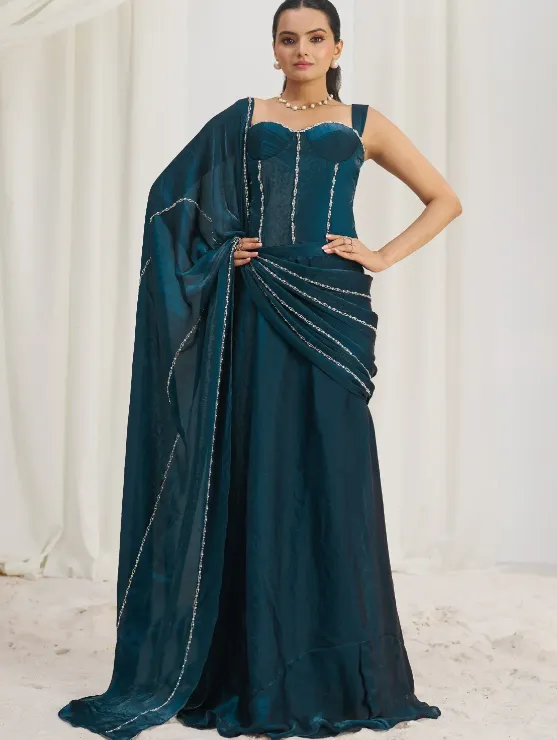
The product photograph shows a perfectly arranged pallu and a blouse that fits the model beautifully. Yet those two details may arrive in different states of completion. While browsing a ready to wear saree, pay attention to which part has actually been stitched: the drape, the blouse, or both. Prepared pleats can save dressing time, but they cannot fix a blouse that arrives as loose fabric. Reading the selected variant carefully prevents an unexpected tailoring appointment days before a special occasion.
Identify What Is Actually Stitched
Descriptions such as pre-pleated, pre-draped and one-minute suggest convenience, but they do not describe identical construction across every design. A purple chiffon example is specifically described as pre-pleated, with an embroidered lace border and matching blouse fabric measuring 0.80 metre. The prepared drape is the time-saving feature; that blouse material still needs attention according to the size or stitching option selected. Look separately for information about the waist fastening, arranged pleats and blouse. A finished photograph alone cannot confirm which parts arrive wearable.
See How Prepared Pleats Work
A traditional unstitched saree asks you to arrange the front pleats and wrap the remaining fabric each time. In a prepared style, some folds or the silhouette have already been secured, although the precise method varies. That changes what you should inspect. Instead of focusing only on fabric length, check the waist measurement, opening and fastening position. Ask for a short demonstration of the selected garment if the listing leaves these details unclear. The aim is an easy drape that also fits your body.
Distinguish Blouse Stitching From Draping
A search for a Ready Made Saree can lead to a broader saree collection, where the term ready-to-wear appears among stitching choices. One teal-blue crepe design has digital and zigzag prints, a 5.5-metre saree and multicoloured blouse fabric listed as unstitched. It also offers a ready-to-wear size option. That alone does not prove the pleats arrive fixed. Confirm whether the choice refers to tailoring the blouse, preparing the saree, or both before treating it as a shortcut for your planned event.
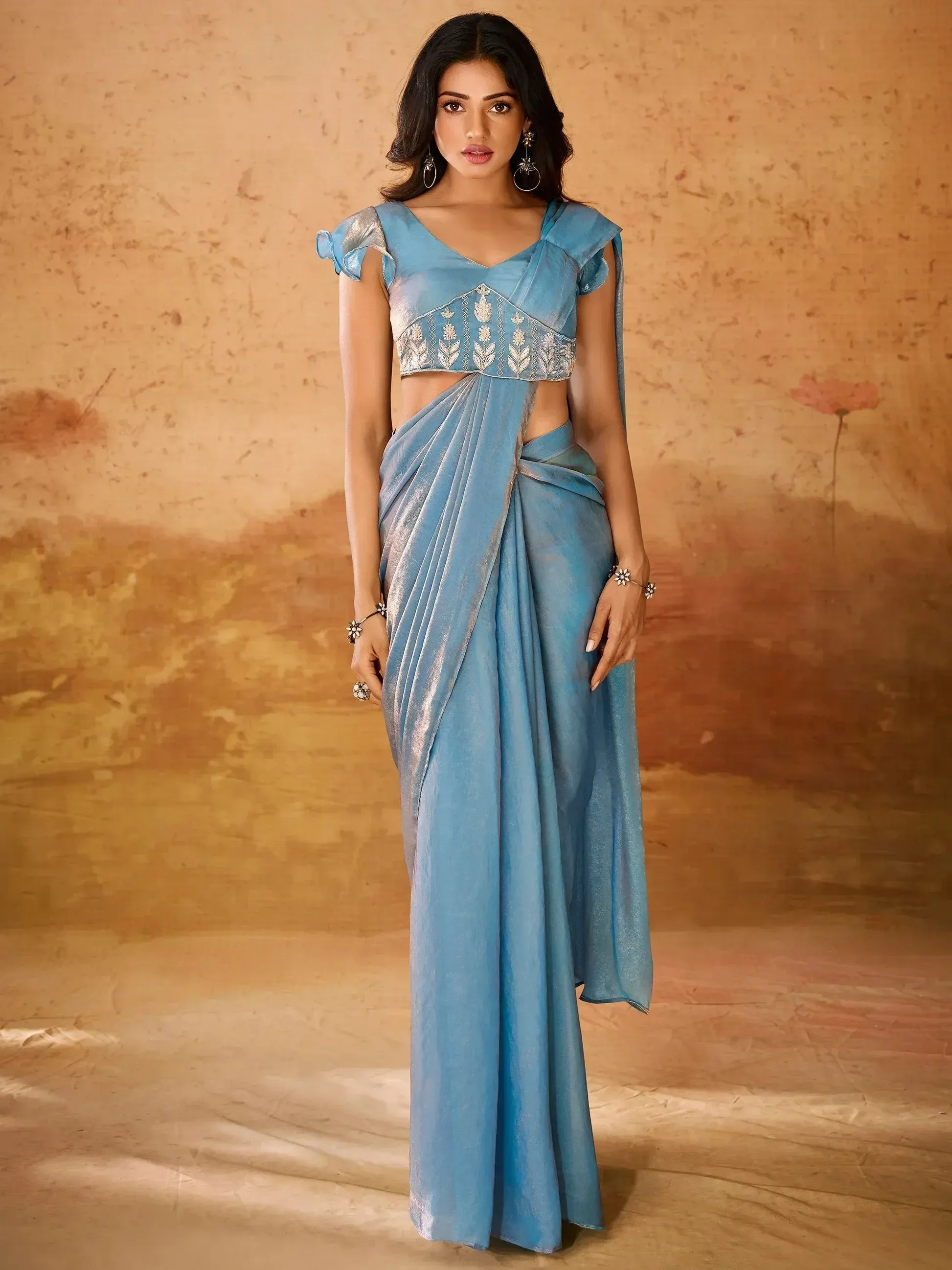
Compare a Fully Stitched Example
A navy organza party design offers a useful contrast: its description identifies a pre-stitched saree with hand embroidery and a matching corset-style blouse, and calls the outfit fully stitched. Sizes are listed from XS through XXL. Even then, the label does not replace a fit check. Compare the waist and bust measurements with the seller’s chart and examine how the pallu sits over the blouse. A beautiful corset neckline is little help if its fastening or shoulder fit needs alteration.
Test the Finished Drape Properly
Once the parcel arrives, put on the complete outfit rather than judging the skirt or blouse separately. Check the waist where it naturally rests, then take a few steps and sit on an ordinary chair. Raise an arm, turn towards a mirror and see whether the prepared pallu holds its position. If the hem catches your shoe or the blouse pulls when seated, note the exact movement. These observations are more useful to a tailor than saying the overall fit feels wrong.
Confirm Everything Before Checkout
The most expensive surprise is often not the garment itself but discovering that a separate service was never selected. Review the variant name, included pieces, measurements and any stitching charges before payment. Look at delivery estimates too, especially when the blouse needs tailoring after arrival. Keep a screenshot of the final selection so your order is easy to explain if an issue arises. For a quick check, use the following five details rather than relying on the product’s ready-made label.
-
Prepared pleats and fastening
-
Blouse stitching status
-
Waist and bust measurements
-
Additional tailoring charges
-
Delivery and exchange conditions
Conclusion
A convenient saree should remove a step from getting dressed, not leave you guessing which step remains. Choose the design whose construction you understand, and make sure the blouse is included in the form you expect. When it arrives, wear it once with your intended shoes and let someone take a natural full-length picture. If you can walk, sit and arrange the pallu without learning an unfamiliar fastening at the last minute, the preparation has earned its place in your wardrobe.